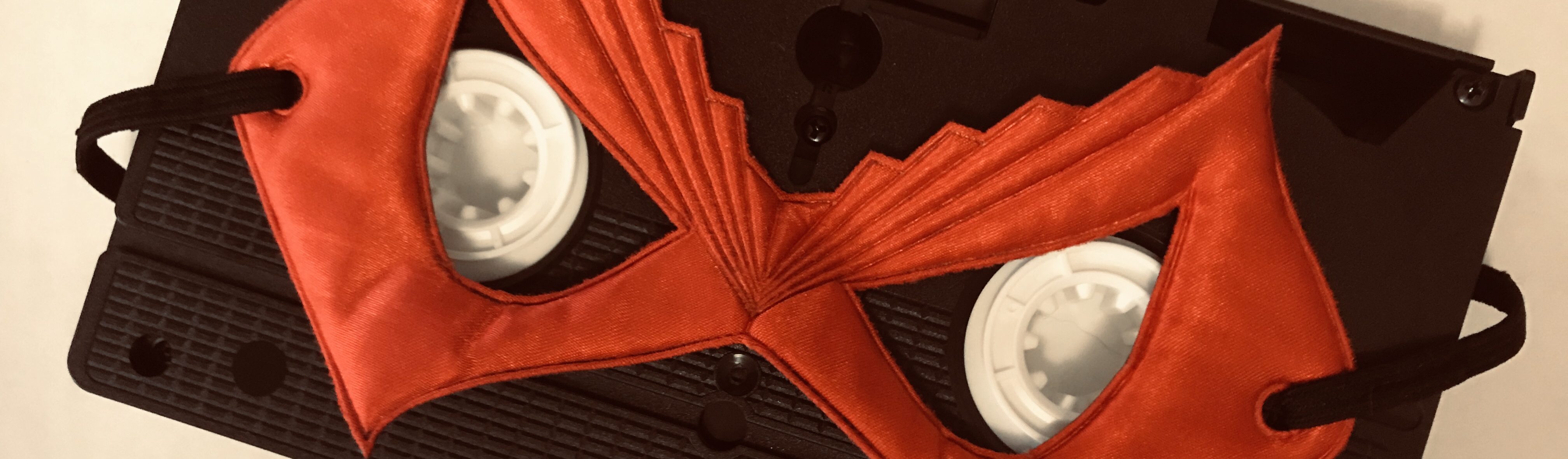
Joe Hill is one of those guys that you generally hear in passing the first time. The first time I encountered him, I had bought his book Heart-Shaped Box from my local Kinney Drug Store back in 2008 or so. I brought it home, put it on the shelf, forgot about it, and now it sits in a storage locker down town. The second incarnation of Joe Hill in my life was through Locke & Key, the comic series that he co-created with Gabriel Rodriguez, and still ranks as the best comic series I’ve ever read. It’s through Locke & Key that I really began to explore Hill’s work beyond comics, and since, it has led me to make multiple purchases of his books. No joke, I own his first three books – 20th Century Ghosts, Heart-Shaped Box, and Horns – In Hardcover, Paperback, e-book, and audio book. Some might think of it as an obsession, but I just say that I’m passionate.

At the beginning of the year, I had a plan. I was going to read 50 books, they were going to be specific, and it was going to be set. I even wrote a post about it. Sure, I’ll read a good portion of those books this year, but knowing that NOS4A2 was being released this year, I didn’t want to hold it off any longer, and sadly, Joe Hill wasn’t on that list (I’m an idiot). I had forgotten about him, which was a huge mistake. So, I said fuck it, and deviated. I wanted to get my fill before April 30th; and I decided that I’d read these books in order of publication. As of the writing of this review, I’m 21% of the way through Horns.
When I read 20th Century Ghosts, it made its impact; simply put, this is the greatest short story collection I’ve ever read. If short story collections were thought of as a greatest hits compilation, this would be on everyone’s shelf, in between a copy of CCR’s Chronicle, and The Eagles Greatest Hits (1971-1975). I don’t like to think of it that way, mainly because Joe Hill is so much more than that. Of course, there are those that would say: “you’ve never read a George Saunders collection before!” Don’t worry, I ordered three, and they’re in the mail. That still won’t change how I feel about 20th Century Ghosts.
I haven’t read a lot of horror in my life. I never really cared for reading until I read Dean Bakopoulos’ Please Don’t Come Back from the Moon. I may be completely out of place, but Joe Hill introduced me to something that I’d never seen in the genre before: sentimentality. Sure, this collection is billed as horror, but it’s more transcendent than that. It’s also versatile; while you have your horror pieces (“Best New Horror,” “You Will Hear the Locusts Sing,” “The Black Phone.”), you also have science fiction (“Voluntary Committal ), comic homages (“The Cape”), period pieces (“The Widow’s Breakfast”), and one of the most unique laments on trees that I’ve ever read (“Dead-Wood”).
As you look closer, 20th Century Ghosts morphs into different tributes and aspects. The collection as a whole is an homage to film as much as it is to the horror masters of literature’s past. The title story is the short story equivalent to Field of Dreams, if you substituted the baseball aspect and replaced it with filmography. Hill beautifully inserts a ghost into a trip through many years of cinema history, and in doing so, his ghostly antagonist becomes as comforting as the films themselves. The story ends like a beautiful love letter. The greatest story in this collection belongs to “Pop Art.” It’s the greatest short story of the 21st century. It leaves a mark that stories like “I Have No Mouth and I Must Scream” or “The Lottery” leaves on you. This is also a story that showcases Hill’s brilliance, as he takes a concept, such as advent of a living inflatable person, and turns it into a medical condition that is believable, and will have you in tears by the end. More than that, this is a lament on death, and what may come after. In many ways that’s what Locke & Key is, or at least an underlining element of it.
Joe Hill is one of those writes to be envied for the gifts that he has and puts on display. A name to be spoken in circles alongside Neil Gaiman, Margaret Atwood, Ray Bradbury, and Richard Matheson. If you’re going to read Hill, start here. Take each story in, one-by-one, and revisit often, like you would a beloved relative.
 HELLIONS TEAM
I’d recommend checking out Rotters by Daniel Kraus. It’s in the Young Adult section but I found it amazing and I like Hill’s stuff too.
Thanks for the rec. It’s wish listed. I will definitely be checking that out soon.
HAVE YOU READ HEART SHAPED BOX YET???? IT IS VERY IMPORTANT THAT YOU DO!!!! IT IS THE BEST BOOK EVER. Sorry for shouting. But it’s important.
I have! And it is indeed awesome!